
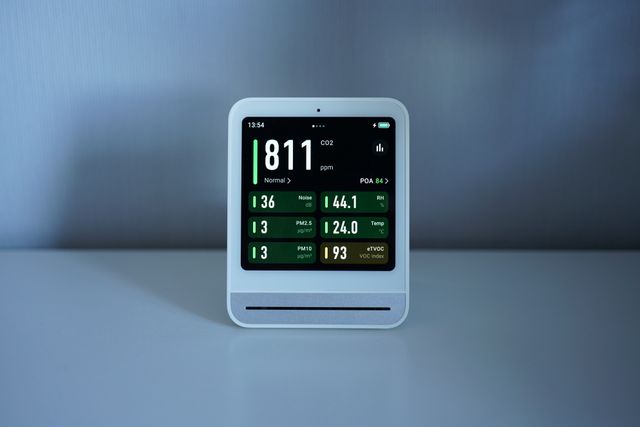
Most homeowners think about air quality only when there is an obvious problem: a musty smell, excessive dust, smoke, or perhaps a family member complaining about allergies. But indoor air can have issues that are difficult to see or smell. That raises a reasonable question: Is buying an air quality sensor for the home actually worth it?
For many households, the answer is yes — as long as the sensor is viewed as a useful monitoring tool rather than a diagnostic device.
What Can a Home Air Quality Sensor Tell You?
Modern indoor air quality monitors can track several conditions, depending on the model. Common measurements include:
- Particulate matter (PM2.5)
- Carbon dioxide (CO₂)
- Temperature and humidity
- Volatile organic compounds (VOCs)
- Carbon monoxide (CO) on some specialized devices
These readings can reveal patterns that otherwise go unnoticed. For example, elevated humidity may point toward a ventilation or moisture-control issue, while recurring spikes in particles could occur when cooking, burning candles, or performing dusty home projects.
The Biggest Benefit: Seeing Patterns
A single reading does not tell the whole story.
Air quality changes throughout the day. Cooking, showering, cleaning, HVAC operation, outdoor air, and even the number of people inside the house can affect readings.
A monitor can help establish a baseline and show when conditions change. That information can be surprisingly useful when deciding whether something simple — such as using the kitchen exhaust fan or improving ventilation — makes a measurable difference.
Think of a sensor as an early-warning tool, not a home diagnosis.
What an Air Quality Sensor Cannot Do
This is where expectations matter.
A consumer sensor generally cannot identify the exact source of a problem, determine whether mold is present, or replace professional testing when a specific concern exists. Readings can also vary between devices, and inexpensive monitors may not measure every pollutant particularly well.
Carbon monoxide deserves special attention. An air quality monitor should never replace properly installed, dedicated carbon monoxide alarms.
So, Is It Worth Buying?
For homeowners who want a better understanding of their indoor environment, a quality sensor can be a worthwhile investment. It is especially useful in homes with limited ventilation, moisture concerns, fireplaces, attached garages, or frequent indoor cooking.
However, buying the most expensive device available is not necessarily the best approach. Look for a monitor that clearly explains what it measures, how it measures it, and what its limitations are.
The Bottom Line
An air quality sensor will not make a home healthier by itself. What it can do is provide information that helps homeowners recognize changes, identify habits worth adjusting, and decide when a potential issue deserves closer attention.
Used that way, it is less of a gadget and more of a window into what is happening inside the home — and that can be valuable information for maintaining a comfortable, well-functioning house.