
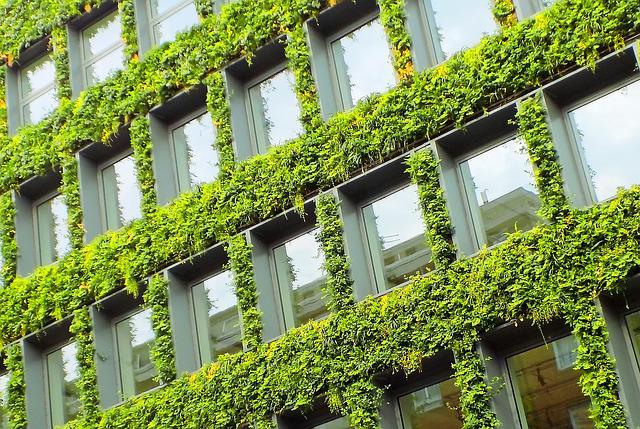
Living walls, also known as green walls or Bio walls, are, as the name would suggest, walls that have been covered in plant life.
A living wall can be put together using a couple of different methods. The panel system is one way. This is a method that uses plastic bags, each filled with soil, which is fitted on the wall. Plants are then put into these soil bags, which enables them to grow, forming a living wall. Another method for creating a living wall is a felt system. Plants are placed into felt that has a waterproof backing. As the plants begin to grow, their roots grow downwards, this enables the plants to gain stability on the wall.
What is a living wall used for? While a living wall can bring some greenery and nature to an otherwise bland space, there are some advantages. For example, because plants produce a natural air-filtration system, a living wall can help to improve the quality of indoor air, especially in office-type environments. In fact, installing a living wall in office buildings is known to reduce the effects of Sick Building Syndrome.
Living walls are not just beneficial inside. Growing a living wall on the exterior of a city building can help to reduce the Urban Heat Island effect, not to mention being something pleasant and relaxing to look at.
Yes, living walls have many benefits. However, if you like the idea of having a green wall in your home, be sure to do your research and make sure the conditions would be right for this type of structure.